
Bcomp and Ather Energy reimagine sustainable materials for the future of electric two-wheelers


B2B News | Source: Bcomp | Electric mobility isn’t just about batteries and motors anymore. Increasingly, the conversation is shifting toward materials, what vehicles are made from, how they look, and how sustainably they’re produced. A new concept vehicle from Indian EV pioneer Ather Energy and Swiss cleantech specialist Bcomp puts that idea front and center.
The result of their collaboration is Redux, a futuristic two-wheeler concept that blends scooter agility with motorcycle dynamics, while showcasing what natural fibre composites can bring to the next generation of electric mobility.

A “Living Laboratory” on two wheels
Founded in 2013 in Bengaluru, Ather Energy was among India’s first electric scooter startups and has since delivered more than 5,000 vehicles. Redux represents a step beyond production realities—a design and engineering experiment exploring new materials, interfaces, and mechanical ideas.
Classified as a motor-scooter, Redux combines compact proportions with a more aggressive, motorcycle-inspired stance. But its most distinctive feature isn’t its silhouette, it’s what the bodywork is made of.
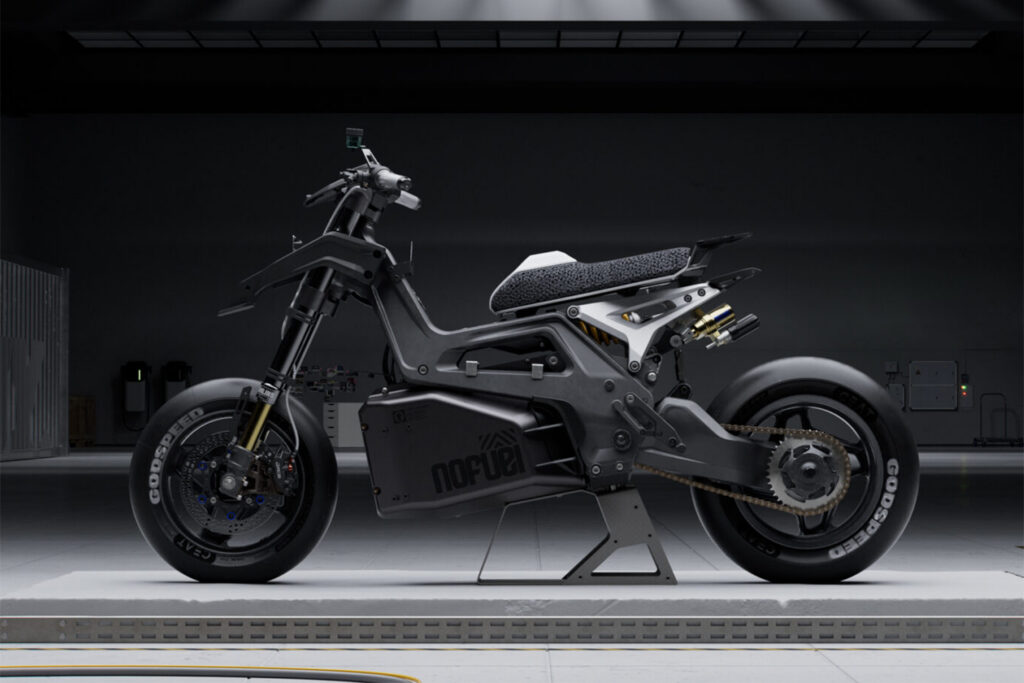
At the core of Redux’s visual and structural identity is ampliTex™, Bcomp’s flax-fibre composite material. Mounted on a lightweight aluminium frame, the ampliTex™ panels replace conventional plastics and fibre-reinforced materials, reducing weight while still meeting the structural demands of a two-wheeled vehicle.
Why flax fibre matters
ampliTex™ is a woven fabric made from renewable flax fibres, offering a dramatically lower carbon footprint than traditional materials like ABS plastic, glass fibre, or carbon fibre. When combined with a thermoset matrix, the material can reduce CO₂ emissions by up to 85% compared to carbon fibre equivalents.

It also brings practical advantages beyond sustainability. Flax fibre composites provide natural vibration damping and more predictable behaviour under stress, qualities that matter on real roads, not just in design studios. At end of life, the material can be incinerated with energy recovery, offering a clearer sustainability pathway than many composite alternatives.
Design you don’t hide
Redux follows an “inside-out” design philosophy, where materials and components are meant to be seen rather than concealed. ampliTex™ plays a major role here, delivering a distinctive woven texture that reads as both technical and organic, perfect for exposed applications.
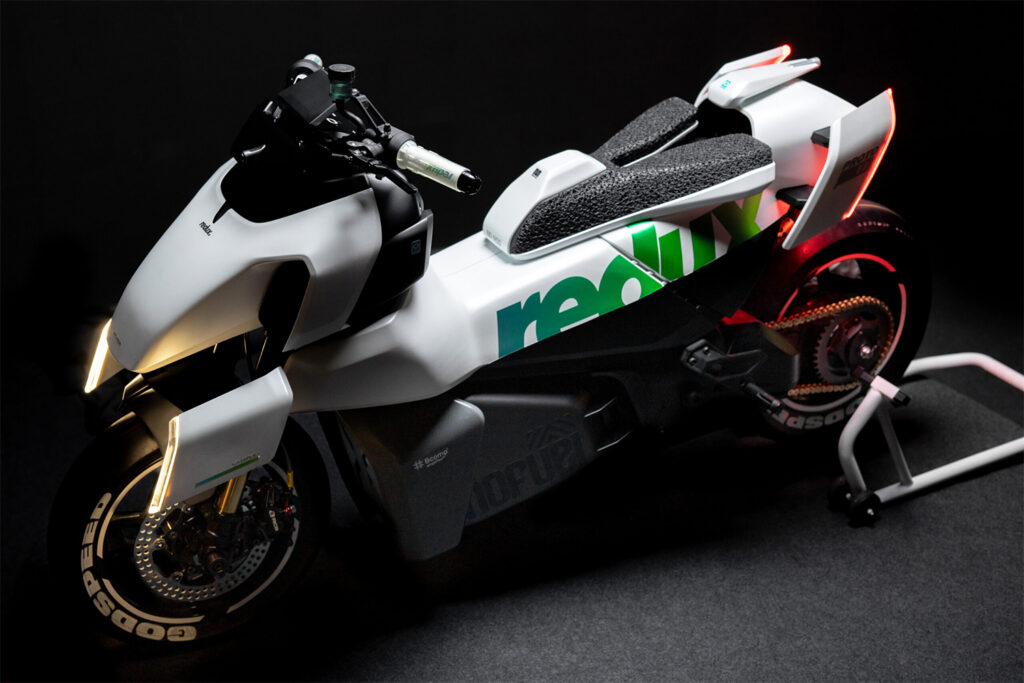
Instead of acting as hidden structure, the flax-fibre panels become a visible part of the vehicle’s identity, reinforcing the idea that sustainability doesn’t have to come at the expense of performance or visual impact.
As Ather’s Head of Design Bikash Jyoti Biswas explains:
“The Redux concept reflects our belief that materials should actively shape both design and performance. Exploring ampliTex™ natural fibre composites allowed us to balance sustainability with stiffness and everyday usability. Redux functions as a living laboratory, giving us insights that will inform future platforms.”
Beyond electrification
For Bcomp, Redux is a clear demonstration of where advanced composites are heading.
“Redux shows exactly what ampliTex™ was designed for,” says Gabriele Grezzana, Market Manager for North America and the UK. “Applications where material performance and visual identity are inseparable. Ather chose flax fibre not just for sustainability, but because it enabled their design vision.”
As electric two-wheelers evolve into lifestyle products rather than simple transport tools, collaborations like this hint at what’s next. Electrification may be the foundation, but materials, design, and sustainability are quickly becoming the differentiators.
Redux may be a concept, but the ideas behind it feel very real.
Images © Ather Energy