
Donut Lab unveils world’s first production-ready solid-state battery at CES


At CES, Donut Lab introduced what it claims is the world’s first all-solid-state battery ready for immediate OEM vehicle production, a milestone that could fundamentally reshape electric mobility. Unlike the many solid-state battery concepts that remain stuck in laboratories or distant roadmaps, Donut Lab’s technology is already destined for real-world use, powering Verge Motorcycles’ lineup beginning in Q1 2026.

The announcement marks a significant leap forward for electrification, positioning Donut Lab as one of the first companies to bridge the gap between experimental battery chemistry and scalable, production-ready deployment.
Solid-state, without the wait
For years, solid-state batteries have been heralded as the holy grail of energy storage: safer, lighter, faster charging, and longer lasting than conventional lithium-ion cells. Yet commercialization timelines have repeatedly slipped.


Donut Lab says that delay ends now.
“Solid-state batteries have always been described as ‘just a few years away,’” said Marko Lehtimäki, CEO of Donut Lab. “Our answer is different. They’re ready today. Not later.”
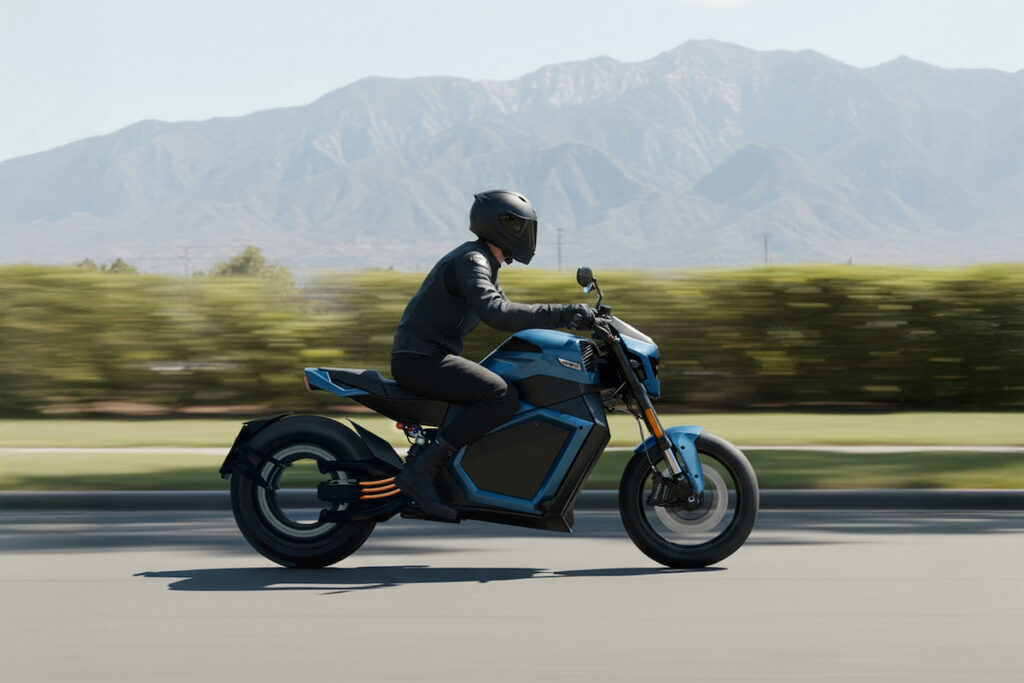
According to the company, its new Solid-State Donut Battery has been engineered for mass production and real-world operation. Verge Motorcycles’ TS Pro and Ultra models will be the first production vehicles on the road using the technology, making them a global first.
Performance that redefines expectations
On paper, the specifications are striking.
Donut Lab’s all-solid-state battery delivers 400 Wh/kg energy density, enabling longer range with significantly less weight. The battery can be charged to full capacity in as little as five minutes, without the typical limitation of stopping at 80%. It also supports safe, full discharge, repeatedly and reliably.

Longevity is another standout. The battery is designed for up to 100,000 charge cycles with minimal capacity fade, an order of magnitude beyond conventional lithium-ion systems.

Safety, long considered the Achilles’ heel of battery technology, is built directly into the chemistry. With no flammable liquid electrolytes, the Donut Battery eliminates the risk of thermal runaway, dendrite formation, and the chain reactions that cause battery fires.

Testing across extreme conditions underscores those claims. Donut Lab reports over 99% capacity retention at –30°C, as well as stable performance at temperatures exceeding 100°C, without ignition or degradation.
Built for scale, and for the world
Beyond performance, Donut Lab emphasizes manufacturability and sustainability. The battery is made entirely from abundant, geopolitically safe materials, avoiding rare or sensitive elements. The company says production costs are lower than traditional lithium-ion, a claim that could accelerate adoption across industries.
Design flexibility is another differentiator. The Donut Battery can be produced in custom shapes, voltages, and geometries, enabling structural integration into vehicles, or entirely new form factors, such as drone bodies or chassis-integrated energy systems.

From microelectronics and drones to defense platforms and grid-scale storage, Donut Lab positions the battery as a general-purpose energy platform, not just an automotive component.
From Donut Motor to battery breakthrough
Donut Lab’s rise has been defined by turning bold ideas into production reality. The company first gained attention with the Donut Motor, an in-wheel electric motor that eliminates traditional drivetrains while delivering exceptional torque and power density.
Introduced at CES 2025, the Donut Motor has since moved into real-world use, with more than 200 OEMs currently engaged in development and integration.
Now, at CES 2026, Donut Lab is repeating the pattern, this time with batteries.
“When we unveiled the Donut Motor, many doubted it until they saw it working on the road,” Lehtimäki said. “With the all-solid-state Donut Battery, we waited until the technology was fully validated and already operating in vehicles. These batteries are real, and they represent the future of electric mobility.”
Verge Motorcycles: a world first
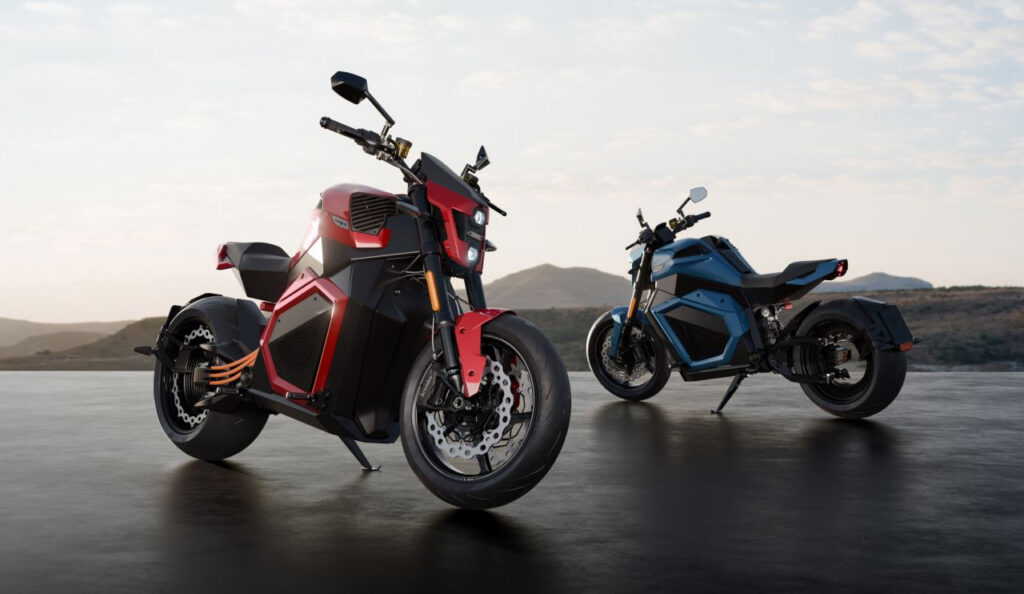
Verge Motorcycles becomes the first manufacturer to bring solid-state batteries into production vehicles. With the new battery system, Verge’s electric motorcycles can charge in under 10 minutes, adding up to 60 kilometers of range per minute of charging. The long-range version delivers up to 600 kilometers on a single charge.
Orders are open now, with first deliveries scheduled for Q1 2026.
A broader ecosystem at CES

Donut Lab’s presence at CES extends well beyond motorcycles, showcasing how its technology scales across sectors:
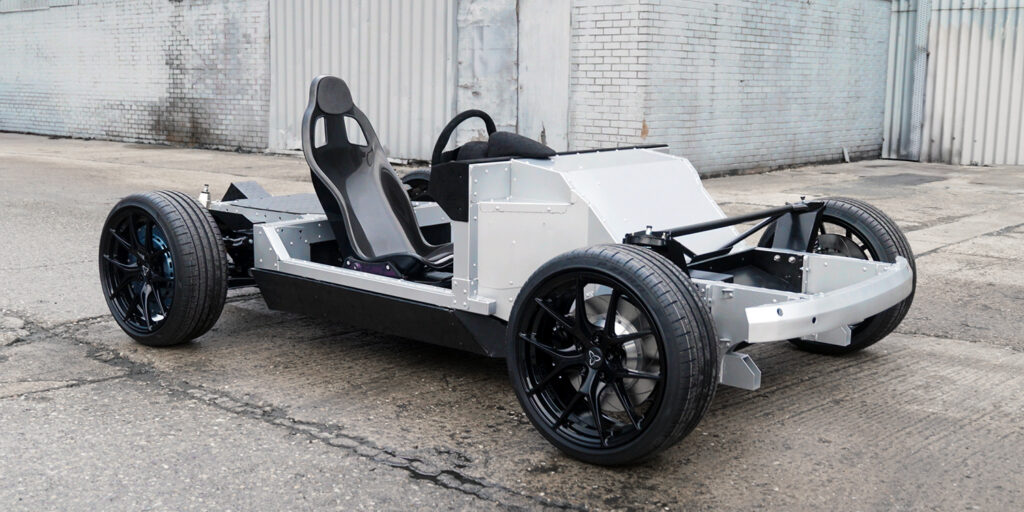
- WATTEV (WATT Electric Vehicles) debuted an ultra-lightweight modular EV skateboard integrating Donut Motors, battery, inverters, and software.
- Cova Power, a joint venture with Ahola Group, unveiled smart trailers that reduce diesel consumption by up to 54%.
- ESOX Group is deploying Donut Lab batteries in defense-grade platforms, including tactical vehicles and next-generation drones where safety and reliability are mission-critical.
Delivering the future: now
Solid-state batteries have long been treated as a promise. Donut Lab is treating them as a product. With production vehicles hitting the road, scalable manufacturing in place, and performance metrics that challenge industry assumptions, the company isn’t just advancing electrification, it’s compressing the future into the present. As Donut Lab’s solid-state batteries move from CES show floors to real streets, the message is clear: the next era of electric mobility is no longer theoretical. It’s already underway.
Source & © pictures: press release Donut Lab – Monday, January 5th