
Italian developer launches 2W Route Planner, a free navigation app built for electric two-wheelers


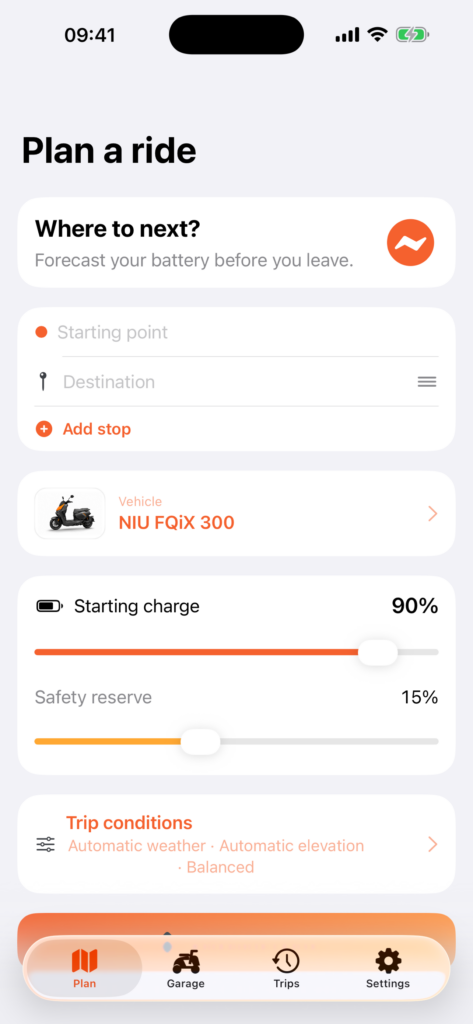
An independent developer in Asti, Italy, has built a route-planning app aimed at a gap left by mainstream navigation tools: predicting how much battery an electric motorscooter, moped or motorcycle will have left on arrival, and whether the roads on the way are legally suitable for that vehicle.
The problem it addresses
Alberto Ingrao, an IT professional and NIU FQiX 300 rider, developed 2W Route Planner after running into a limitation shared by most general-purpose navigation apps: they calculate how to reach a destination, but not whether an electric two-wheeler can get there with a usable charge remaining, or whether the route is even open to that class of vehicle. The app is a personal, independent project rather than a commercial product. It is free, carries no advertising or subscription, and is funded only through optional voluntary contributions.
Guy Salens – THE PACK: “Range anxiety remains one of the biggest psychological barriers to electric two-wheeler adoption – not because the range itself is inadequate for most trips, but because riders lack a reliable way to know what’s actually left once wind, elevation, temperature and riding style are factored in. What stands out about 2W Route Planner is how directly it targets that uncertainty: rather than a single range number, it gives riders a leg-by-leg, condition-adjusted estimate they can actually plan a route around, stops included. Tools like this won’t eliminate range anxiety on their own, but they go a long way toward replacing guesswork with a number a rider can trust.”
How the energy estimate works
The planner starts from vehicle-specific data – usable battery capacity and declared range – to set a baseline consumption figure. It then adjusts that baseline using route distance and expected speed, elevation gain and descent (accounting for limited regenerative recovery), temperature, headwind and rain, rider and passenger payload, riding style, traffic and auxiliary consumption, battery health, and a safety reserve the user sets.
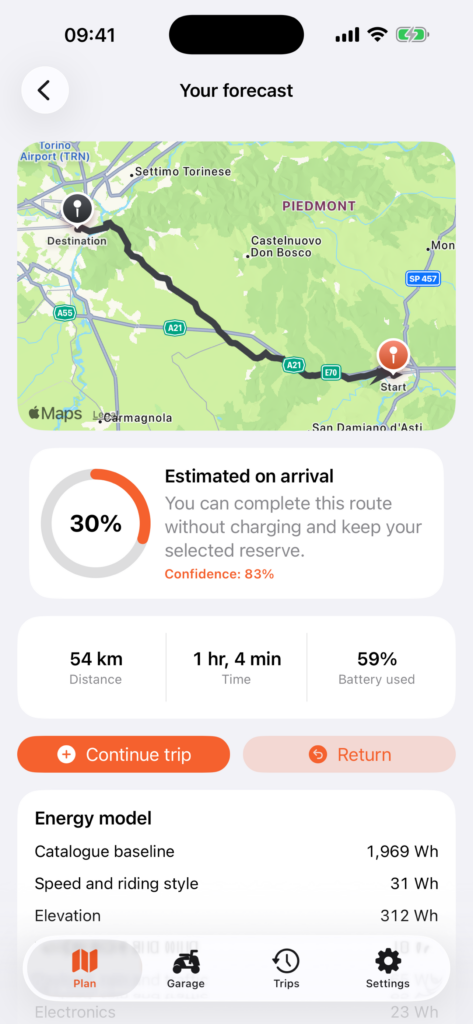
Consumption is calculated leg by leg, so remaining charge carries over correctly when a rider adds stops, continues a journey, or calculates a return trip. If the available energy isn’t enough to complete the route, the app reports the estimated percentage shortfall rather than simply stating the destination is unreachable.
Road eligibility
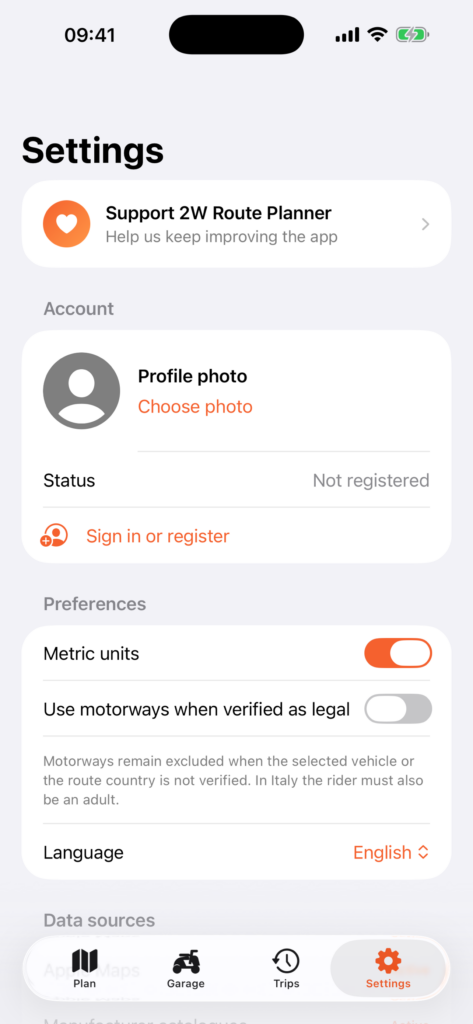
The routing logic excludes motorways automatically when the selected vehicle isn’t rated for them, and riders can choose to avoid motorways regardless of eligibility. Ingrao is clear that the app’s output is advisory: local signage, laws, weather, actual battery condition and rider judgement take priority over the estimate.
Platforms and data sources
The iPhone app is built natively in SwiftUI for iOS 17 and later, using Apple Maps for search, directions and route display, and StoreKit for the optional voluntary support mechanism. A parallel web app runs on OpenStreetMap-based services, Valhalla for routing and Open-Meteo for weather data. Supabase handles authentication and syncs profiles, preferences and saved trips across both. The two versions share the same underlying energy-model principles. The interface is available in Italian, English and Simplified Chinese.
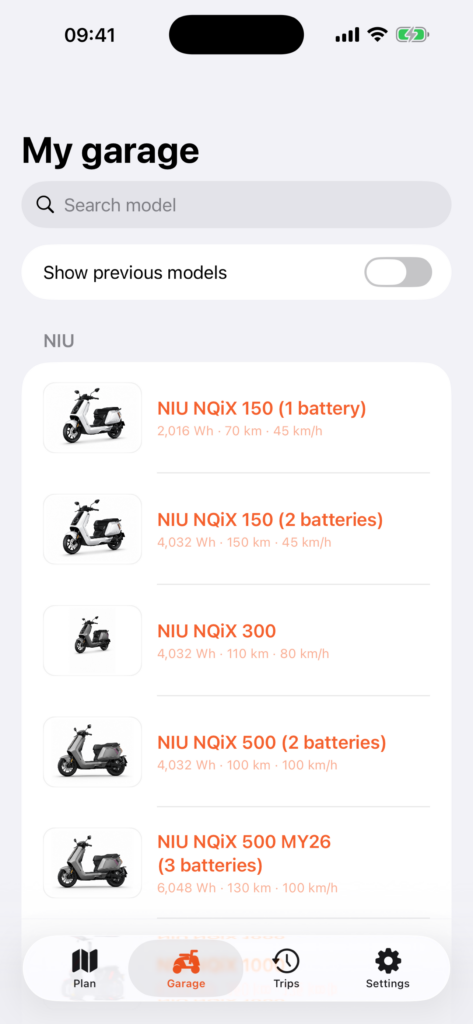
The initial vehicle catalogue covers 31 models from NIU, Segway, Silence and Vmoto. The app does not read live telemetry from the vehicle – its forecasts are based on stored vehicle data, route characteristics and the conditions a rider selects.
What’s next
Ingrao’s roadmap includes expanding the vehicle catalogue, refining the energy model with real-world usage feedback, adding more languages, and eventually releasing an Android version.
In Alberto’s words:
“General navigation tells you how to get there. Electric two-wheeler riders also need to know whether they can arrive with a safe battery reserve, on roads their vehicle is actually allowed to use.”