
Zero CCS fast charging – first look at the CCS ChargeTank


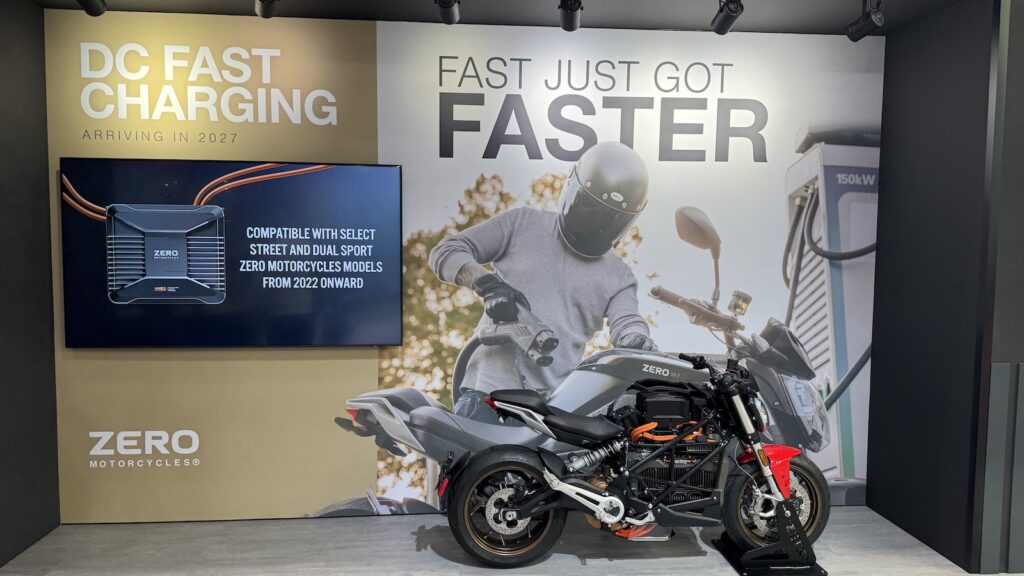
Source: SteckerBiker.de | When Zero announced CCS fast charging for 2027 in September, SteckerBiker and THE PACK reported on the planned retrofit. At the time, it was still unclear which older bikes would qualify with a replacement battery. At EICMA the team from SteckerBiker finally got to see a prototype in real life. We talked about the charging technology with Kenyon Kluge, Vice President of Design and Engineering at Zero Motorcycles.
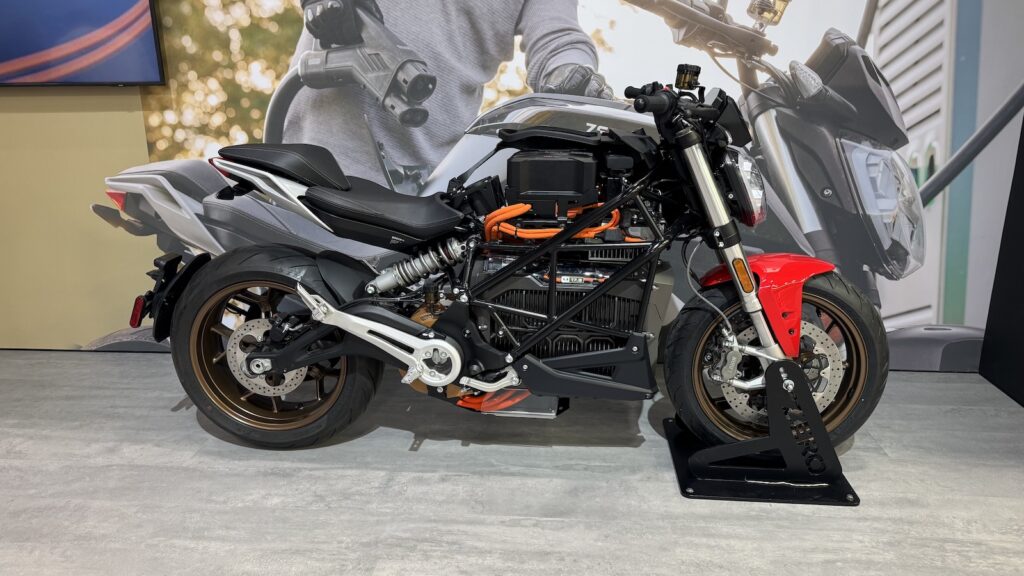
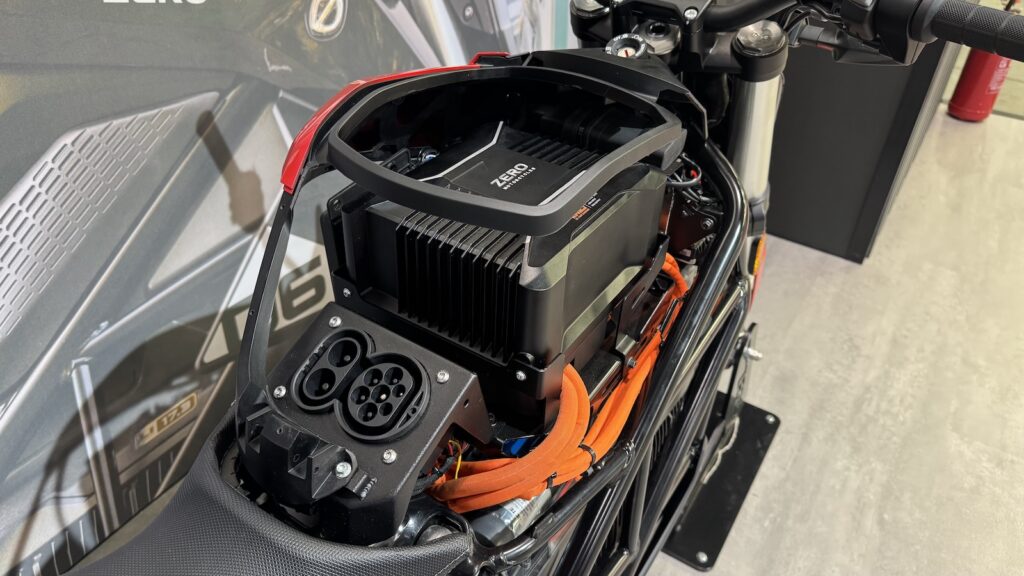
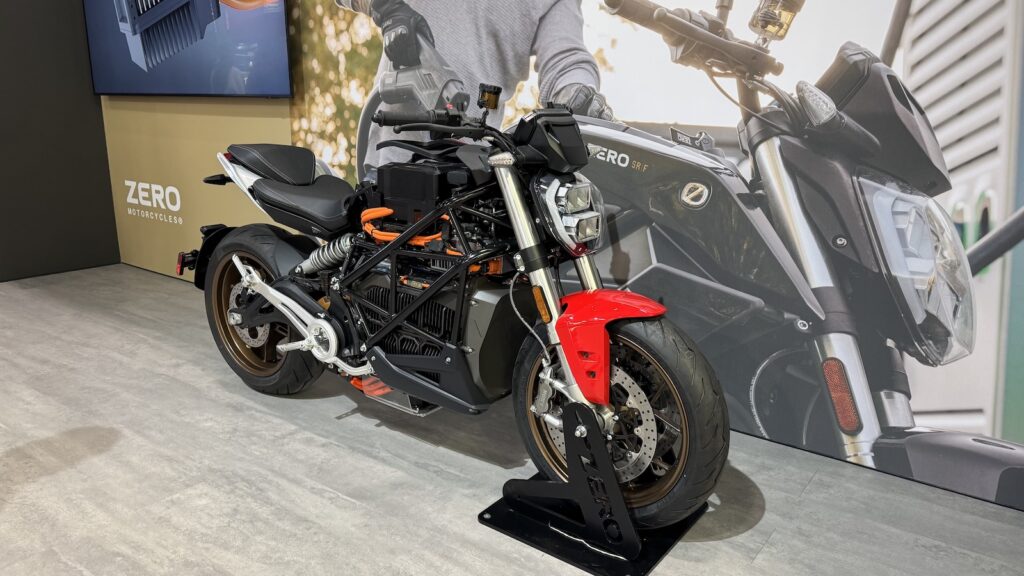
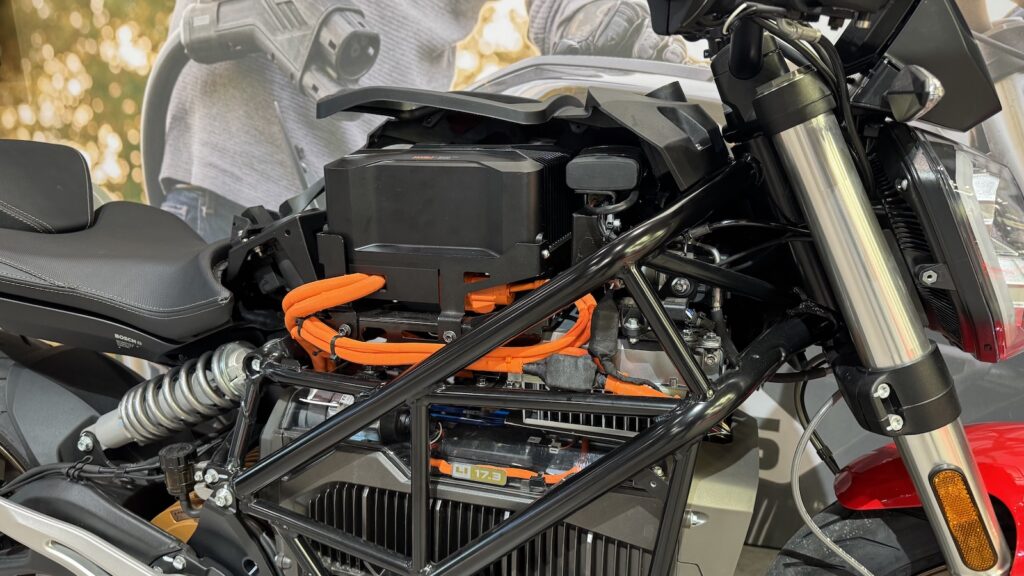
Zero showed the module, which doesn’t have a name yet, in an SR/F with its bodywork removed. We’ll call it the CCS ChargeTank. It sits above the battery, in the tank compartment area. The CCS Combo 2 socket is mounted just in front of the seat. Our photos clearly show the Type 2 section and the two additional DC pins.
From 20 to 80 percent in under 30 minutes
Of course, we didn’t see an actual charging session at the stand. For compatible batteries up to 17.3 kWh, Zero is targeting less than 30 minutes from 20 to 80 percent. The manufacturer hasn’t published a maximum DC charging power yet, and wouldn’t share one when we asked. For comparison, Zero quotes 43 minutes for the same charging window on the SR/F with the current ChargeTank, which charges at up to 12.6 kW.
Which Zero models can be retrofitted?
According to Zero, the CCS ChargeTank can be retrofitted to all Gen3 models from model year 2022 onwards. That includes the S, SR, SR/F, SR/S, DS, DSR and DSR/X. Earlier Gen3 SR/F and SR/S bikes from 2019 onwards also qualify. They originally came with a 14.4 kWh battery, but they’re eligible once that battery has been replaced with a current 15.6 kWh unit.
The CCS ChargeTank itself is an optional extra. Zero plans to offer it on new motorcycles later in 2027. Authorised Zero dealers will fit it, both on new bikes and on compatible existing ones. Pricing hasn’t been set yet, and there’s no date yet for when the retrofit kit will be available.
Standard AC charging stays, and you may get more storage space
The CCS ChargeTank uses the mounting space Zero currently reserves for the ChargeTank or the PowerTank. The standard onboard chargers stay where they are, so each motorcycle keeps its standard AC charging power. Depending on the model, that’s between 3 and 6.6 kW. Owners who already have the extra ChargeTank fitted will have to remove it, though. There can be only one.
The prototype is also more compact than the current ChargeTank. If Zero keeps this design for production, there should be noticeably more storage space left after the CCS retrofit than with the ChargeTank or the PowerTank. On the S models in particular, you’d notice that in everyday use, because fitting the current ChargeTank leaves almost nothing of the tank compartment. How much space the production kit will actually leave is still unknown.
The current ChargeTank could charge faster too
Zero switched to its current cell chemistry in 2022. Speaking to SteckerBiker, Kluge explained that Zero deliberately set a conservative AC charging curve at the time to protect the cells. Now that it has real-world experience, Zero could adjust the curve with a firmware update in the medium term, and wants to. If the battery takes more power over a larger part of the charging session, the average charging power goes up, even though the peak power stays the same.
The update will apply to the same Gen3 motorcycles listed above with the current battery. The revised curve is expected to apply to the current ChargeTank and to AC charging with the CCS ChargeTank. Kluge didn’t give a date or new charging times.
SteckerBiker / THE PACK News opinion:
For us, the biggest gain is having another choice at charging stops. On tour, a retrofitted Zero will be able to use CCS fast chargers along the route. For longer stops at a hotel or in town, the standard AC charging power is still there. Zero is also offering the conversion for older SR/F and SR/S bikes with a 15.6 kWh replacement battery, and that makes it especially interesting for current owners.
Whether the retrofit is worth it depends on the fitting price. It also depends on how close the production version gets to the targeted 30 minutes from 20 to 80 percent in everyday use. Riders who stick with the current ChargeTank could benefit too. If Zero adjusts the AC charging curve the way Kenyon Kluge described, charging stops could get a bit shorter without any conversion.
This article was first published in German by SteckerBiker, THE PACK’s German media partner, and is republished here in English with their permission. Read the original at THE PACK News / SteckerBiker: