
Riding an 11 kW electric motorcycle on a car (B) Licence – What ’11 kW’ means, and the country-by-country reality


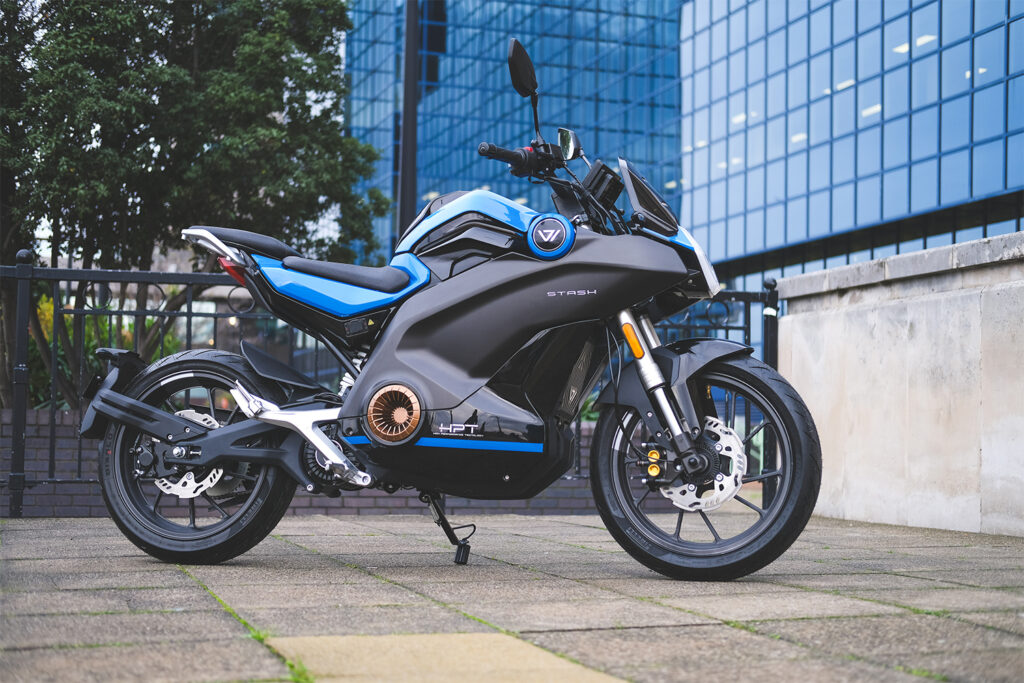
A THE PACK briefing for our European community. Rules change, so always verify with your national licensing authority before riding. This article is not ordered, sponsored, or influenced by any electric motorcycle brand. Any brands, models, or images mentioned are purely coincidental and used for illustrative purposes only.
The EU baseline, in one paragraph
Under EU Directive 2006/126/EC, an 11 kW electric motorcycle falls into category A1: max. 125 cc-equivalent, max. 11 kW, and a power-to-weight ratio no higher than 0.1 kW/kg. A1 is, in principle, a separate licence from car category B. But the directive also lets member states grant national exceptions allowing B-licence holders to ride A1 machines – and this is where it gets messy. Roughly half of Europe offers some form of “B gives you A1” shortcut; the other half doesn’t. Crucially, almost every one of these shortcuts is a national derogation, valid only inside that country’s borders – take the bike across a border and you’re often riding illegally, even if your home country is fine with it.
That single point, territorial validity, is the thing most riders get wrong, and it’s the thing worth hammering home to our audience.
What ’11 kW’ actually means – peak power vs. continuous power vs. rated power
Before getting into the country rules, it’s worth clearing up the number that underpins the entire A1 category, because it’s the detail readers most often misunderstand – and the reason some “11 kW” electric motorbikes feel a lot faster than any (trditional) 125cc.
Peak power (maximum power) is the highest output a motor can physically produce, even if only for a few seconds. This is the figure often used in general marketing and in North American (SAE-standard) spec sheets. On its own, it says almost nothing about what a motor can sustain.
Continuous power / rated power – the figure that actually governs A1 homologation – is defined under UN/ECE Regulation No. 85, which sets out the “measurement of net power and the maximum 30-minute power of electric drive trains.” For an electric drivetrain, this regulation specifies two distinct official tests:
- Net power: measured on a test bench after a short high-load run (broadly, a few minutes at a high percentage of maximum output) – the EU’s standard method for rating a drivetrain’s usable output.
- Maximum 30-minute power: the output the motor can sustain continuously for a full half hour without exceeding its thermal limits.
Under EU Regulation 168/2013 (the L-category vehicle type-approval framework), it’s this rated/continuous figure – not peak – that must sit at or below 11 kW, alongside the 0.1 kW/kg power-to-weight ceiling that defines A1.

Why this matters in practice: a combustion engine’s rated and peak outputs are essentially identical – a 125cc engine making 11 kW at high revs simply makes 11 kW, continuously, for as long as the throttle is held. An electric motor doesn’t behave the same way. It can heavily overdrive its continuous rating for short bursts – limited mainly by heat building up in the windings and controller – before the system throttles it back. That’s how a bike can be legally homologated at 11 kW continuous while its controller allows brief bursts of 40+ kW for acceleration.

The upshot for readers: the number that determines A1 eligibility is continuous/rated power, not peak power, horsepower claims, or displacement-equivalent marketing. A manufacturer advertising “45 kW” or “60 hp” for an “11 kW” A1 bike isn’t being misleading – both figures are real, they’re just measuring different things (sustained output vs. burst). It’s also why some A1-class electric motorcycles can out-accelerate full A2 or even unrestricted A-category petrol bikes off the line, despite being legally rideable by a 16-year-old with a base A1 licence. Sustained hard acceleration or extended high-speed riding will eventually pull performance back toward the continuous-power ceiling as the controller manages heat, so real-world behaviour on a long ride softens compared with the initial burst.

Country by country
🇫🇷 France
Two separate routes to a 125 cc/11 kW machine:
- Full A1 licence (from 16, exam-based) – valid EU-wide.
- “Équivalence 125” via permis B: hold your B for 2+ years, complete a 7-hour practical course (no exam), get a certificate. This lets you ride from age 18.
- Automatic exemption: B licence obtained before 1 March 1980 carries A1 rights automatically, no training needed. A similar exemption exists for anyone who insured a 125cc-class bike between 2006–2010/2011.
- Territorial limit: the 7-hour equivalence is French-only. Take the bike to Belgium, Germany or beyond and you legally need a real A1.

🇧🇪 Belgium
- B licence obtained before 1 May 2011 → automatically allowed to ride A1-class bikes (125cc/11kW), marked as code 372 on the licence.
- B licence obtained from 1 May 2011 onward → need a 4-hour practical course at a driving school (no exam) to get code 372.
- B licence obtained before 1 January 1989 → full A licence rights, any power, and this one does travel – it’s treated as a genuine A-category entitlement.
- Territorial limit: code 372 (both the automatic and the 4-hour version) is valid only in Belgium. For riding abroad, a real A1 is required.

🇩🇪 Germany
- Standard route: full A1 licence, from 16.
- B196 key code: B-licence holders aged 25+, holding B for 5+ years, can add key code 196 after a short training (no exam: roughly 4×90 min theory + 5×90 min practical). This covers 125cc/11kW two- and three-wheelers, including electric ones (rated purely by the 11 kW / 0.1 kW/kg limits, displacement is irrelevant for EVs).
- Territorial limit: B196 is Germany-only.
- Historic exemption: a B (or old Class 3) licence issued before 1 April 1980 carries automatic A1 rights, valid abroad too.
- Good to know for cross-border riders: Germany officially recognises certain other countries’ car-licence-based A1 rights on its own soil – Italian B licences (which include A1 nationally), Belgian B licences issued 1967–1988, Luxembourg B licences pre-1977, and specific French/Norwegian historic cases. It’s a patchwork, and it only runs in one direction per country.
🇮🇹 Italy
- The most permissive system in Europe: any B licence holder (18+) can ride A1-class vehicles (125cc/11kW/0.1kW/kg) nationally, with no extra training, no exam, and – unlike France, Belgium or Germany – no minimum years of B-licence seniority.
- Territorial limit applies as everywhere else: this is a national derogation, not recognised once you leave Italy. Riding one abroad on a B licence alone is treated as riding without the correct entitlement.
🇪🇸 Spain
- Historically, B-licence holders with 3+ years’ seniority could ride 125cc/11kW class bikes automatically. This changed in 2026: new B-licence holders must now complete a mandatory 7-hour course. Anyone who already held a B licence for 3+ years before 1 January 2026 keeps the old automatic right (grandfathered).
- Territorial limit: Spanish sources are explicit that this equivalence is valid in Spain only – an A1 licence is required to ride the same bike in other EU states.
- Separate note via FEMA: Austria’s own B111 code (B-with-A1) is in turn recognised in Spain if the Austrian licence has been held 3+ years – one of the few instances of cross-border recognition rather than a purely domestic rule.
🇳🇱 Netherlands
- No equivalence at all. A Dutch B licence does not permit riding a 125cc/11kW machine, at home or abroad. A separate A1 (or higher) licence is mandatory.
- This also means Belgian or German riders using their national B-based equivalence cannot legally use it in the Netherlands – the derogation doesn’t travel, and the Netherlands doesn’t grant its own version.
🇬🇧 United Kingdom (non-EU, own regime post-Brexit)
- A full UK car licence does not on its own permit riding a 125cc/11kW motorcycle.
- What it does give you: eligibility to treat the car licence as a provisional motorcycle licence. You still need CBT (Compulsory Basic Training) – a one-day, non-exam course – before riding a 125cc bike on the road with L-plates, no motorway, no pillion.
- CBT certificate (DL196) is valid 2 years; to ride without L-plate restrictions (motorway, passenger) you need the full A1 practical test.
- One legacy exception: a car test passed before 1 February 2001 allows riding a 50cc moped without CBT – but this does not extend to 125cc/11kW machines.

🇦🇹 Austria, 🇨🇿 Czech Republic, 🇵🇹 Portugal, 🇱🇹 Lithuania – the cross-border exception cluster
Austria has its own B-with-A1 code (B111), granted to B-licence holders under Austrian rules. Unusually, this one is recognised beyond Austria’s borders in a handful of countries:
- Spain: if the Austrian B licence is 3+ years old.
- Portugal: minimum age 25.
- Czech Republic: automatic-transmission machines only.
- Italy and Lithuania: also listed as recognising it.
This is the exception that proves the rule: cross-recognition exists, but it’s the product of specific bilateral-style arrangements, not a general EU norm.
Everywhere else
For the remaining EU/EEA countries (Poland, the Nordics, Ireland, Greece, the Baltics beyond the Austria case, Central/Eastern Europe, etc.), the default EU position applies: B and A1 are separate licences, and riding an 11 kW e-moto legally requires an A1 (or higher) entitlement, obtained through the normal age/training/exam route. Treat any B-based shortcut as the exception, not the rule, unless a rider can point to a specific national law for their country.
The one message worth repeating to readers
- Check the power rating, not the “125cc-equivalent” marketing line. For an EV, the 11 kW continuous rating (and 0.1 kW/kg ratio) is what regulators check – displacement is meaningless.
- A national B→A1 shortcut is a local privilege, not a European right. It almost never survives a border crossing.
- A full A1 licence, obtained by exam, is the only version that’s automatically valid across the whole EU/EEA.
- Rules are moving. Spain tightened its rule in 2026; France, Germany and Italy have all seen minor procedural changes in the past year. Anything published on this topic has a shelf life – always point riders to their national transport authority for the current, definitive text.
Sources: national transport authorities and FEMA’s (Federation of European Motorcyclists’ Associations) driving-licence overview, cross-checked with country-specific automotive and legal press, July 2026.